
Financial Assistance
There are more ways to pay for senior living than you may realize.
Here’s a clear look at the options that could help you and your family plan with confidence.
Deciding to move to a senior living community is a big, yet exciting, step in life. You can live a maintenance-free lifestyle with access to social opportunities and care when you need it. As you prepare for this next chapter, you may wonder how you will pay for it. Many financial options exist to fit the needs of any resident’s situation.
Comparing Costs: Home vs. Community Living
What’s Included in
Independent Living
Scheduled transportation
Housekeeping services
Chef-prepared meals
Apartment Maintenance
Private apartments
Wi-Fi
Salon and spa
What’s Included in
Assisted Living
24-hour staff
Medication assistance
Bathing assistance
Help getting dressed
Emergency alert system
Scheduled transportation
Housekeeping & linen services
Chef-prepared meals
Apartment Maintenance
Private apartments
Wi-Fi
Engaging daily events
Salon and spa
What’s Included in
Memory Care
24-hour staff
Medication assistance
Bathing assistance
Help getting dressed
Emergency alert system
Scheduled transportation
Housekeeping & linen services
Chef-prepared meals
Apartment Maintenance
Private apartments
Wi-Fi
Engaging daily events
Salon and spa
Ways to Pay for Senior Living
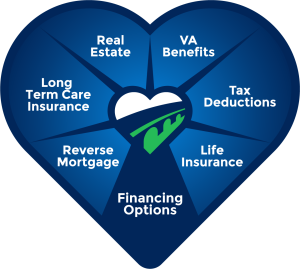
Yes. Personal resources such as savings, 401(k) funds, stocks, bonds and CDs are commonly used to help cover expenses. As you begin creating a budget to understand affordability, it’s best to start by having a clear understanding of all personal resources that are available.
Yes, and this equity may be one of your largest assets. Working with the right real estate agent to sell your home at maximum value can provide a sum of money to help fund your senior living expenses. Seniors Real Estate Specialist® (SRES®) are Realtors® with an advanced certification and specialize in helping older adults sell their homes. You can also liquidate assets and conduct estate sales so you keep only what you want and use the additional funds to help pay for senior living.
Possibly. These types of policies can also be very specific about what services and care they cover – and what they do not. Review your policy or speak with your insurance provider to learn if and how you can use your long-term care insurance policy. If you’re worried you’re not getting the maximum payouts for care or have questions about your policy, ElderLife has consultants available to help review your policy, at no cost to you.
In some cases, and depending on the type of policy you have. As you age, your life insurance premiums may increase. In some cases, policyholders decide to let their policies lapse because of the increased premiums. Depending on the kind you have, you may be able to access funding from it or sell it during your lifetime, which you can use to pay for senior living. Not all life insurance policies can be used this way, so it’s best to review your policy to determine if and how you can use it to help pay for senior living.
The Department of Veteran Affairs (VA) offers benefits to help Veterans pay for increased senior care. The Aid and Attendance benefit is one of these programs and can provide eligible U.S. military Veterans and their spouses more than $2,700 of monthly, tax-free income, which can help cover the costs of their senior care. Eligibility can be determined in less than 5 minutes by reviewing wartime dates, discharge type, care needs, income and assets.
We can connect you with accredited agents experienced in working with the VA to help you navigate the enrollment process and ensure you receive the benefits you’re entitled to in a timely manner. Plus, Phoenix Senior Living offers Veterans a 5% discount on monthly rates. Certain conditions apply, so contact your local community for more details.
The Internal Revenue Service (IRS) offers tax deductions on some costs related to senior care. Generally, you’re able to deduct certain medical expenses if they are over 7.5% of your adjusted gross income. There are rules on what you can and cannot deduct, but these tax deductions can go a long way. Since the tax rules are complex, it’s always best to consult your accountant or tax advisor. Their expert knowledge may be able to help you free up more money to help you pay for senior living.
Financing & Government Programs
When transitioning to senior living, it’s not uncommon to have a short waiting period before long-term resources are available to pay for increased care. A few common examples of this period are waiting for the sale of a home, VA benefits to be awarded, the elimination period for a long-term care insurance policy to end or the liquidation of stocks or other assets.
A delay before receiving these funds does not mean you need to delay your move into a community. The ElderLife Bridge Loan can help “bridge” the gap between your move-in and when the funds become available. They have helped tens of thousands of families in this situation for more than 22 years. With a single phone call to ElderLife Financial, you can complete your application within 10 minutes and get potential approval within an hour. ElderLife Financial funds many of its Bridge Loans within 24 hours – allowing you to move into your desired community within a day.
Once your other resources are available, you pay back what you borrowed and use the remaining funds to pay for care long-term. If you have money tied up in other assets, but need care right away, ElderLife Financial can solve your cash flow issues.
A reverse mortgage is a type of loan that gives adult homeowners ages 62 and over financial options for using the equity in their home. There are a few kinds of reverse mortgages, and a Home Equity Conversion Mortgage (HECM) is the most common type. It is federally regulated to ensure the lender engages in fair practices.
People who want to access an HECM also go through a required counseling session to learn if and how this loan is right for them. If at least one homeowner plans to remain living in the home, a reverse mortgage or HECM could allow you to leverage the equity in your home to pay for care. If you think an HECM reverse mortgage may be a financial solution for you, consult with a federally approved lender in your state.
Medicare is federal insurance that can cover the cost of healthcare services. It is available to certain populations of people, including individuals age 65 and over, certain younger people with disabilities and people with end-stage renal disease.
While Medicare typically does not cover certain senior care services, it may under certain circumstances. You may be able to use your Medicare healthcare plan to help cover some costs of senior living, depending on your unique situation. Consult with your Medicare plan provider to determine if and which costs Medicare can cover.
Medicaid is a health insurance program that is jointly regulated at the federal and state levels available to certain people with low incomes. This means that the U.S. government creates certain rules that apply to all state Medicaid programs while allowing each state to make individual choices about the programs they provide to their residents.
Certain senior living communities accept Medicaid as payment, while others do not. If you have Medicaid, or want to learn if you’re eligible, you can contact your state’s Medicaid office to learn more. You should also consult with your senior living community to learn if they accept Medicaid as payment.
Looking for personalized financial guidance? Our partners at ElderLife Financial offer free consultations to help determine which resources are available to you. Visit their website, call (833) 634-1195, or email [email protected] to take the next step.
How to Take the Next Step:
There are many ways to pay for senior living, but knowing which options are best for you and your family may seem daunting. Your free consultation with an ElderLife Financial Concierge can help determine which resources are available based on your unique situation.
Simply fill out the form to the right, call 833-634-1195, or email [email protected] to take the next step.